
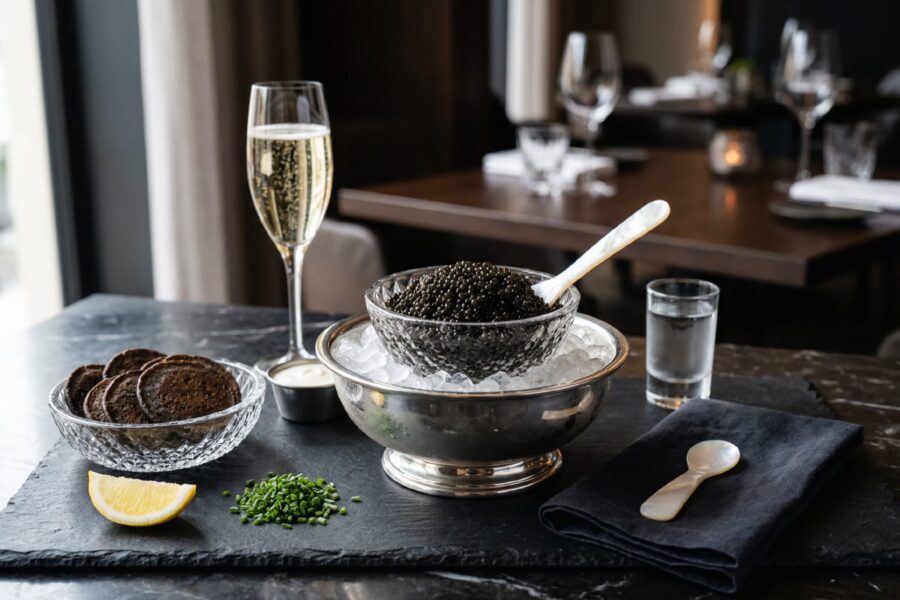
Malossol black caviar keeps its natural flavor through a precise combination of minimal salt, strict cold storage, and careful processing. No chemical preservatives are needed because salt, temperature, and airtight packaging work together to stop spoilage at its source.
Salt has preserved fish roe for centuries across Russia and the Caspian region. The word “malossol” comes from the Russian for “little salt,” and this name describes both a processing method and a quality standard. When salt content stays between 3% and 5%, sturgeon roe holds onto its buttery, briny, and mineral notes without becoming overpowered. The science behind this method is well documented and explains why malossol-cured black caviar remains the reference point for fresh-tasting roe worldwide.
Getting this balance right requires more than just adding less salt. Producers must control temperature at every stage, from harvest to tin. Packaging must block oxygen. The sturgeon species and the quality of each egg’s outer membrane also shape how well flavor survives curing. Each of these factors reinforces the others, and removing any one of them causes quality to drop fast.
Why minimal salt alone keeps malossol black caviar flavor intact
The relationship between salt and flavor in malossol black caviar is precise. Too little salt and microbial spoilage begins within days. Too much and the roe tastes flat, sharp, and one-dimensional. The 3%–5% range represents the point where salt does its preservation work without masking the subtle taste of sturgeon roe.
Salt works on multiple levels at once. It draws water out of the egg cells through osmosis, controls bacterial activity, and interacts with the egg’s natural fats and proteins to sharpen flavor rather than dull it. Each of these functions connects directly to why light salt curing produces better-tasting caviar than any heavier method.
How 3–5% salt concentration preserves roe without masking taste
Salt concentration in malossol caviar processing stays between 3% and 5% by total weight, with many high-grade producers targeting 3.5% to 4%. At this level, the salt draws moisture out of the egg cells just enough to slow bacterial growth without collapsing the egg’s internal structure.
The eggs retain their round shape, firm texture, and volatile aromatic compounds. These compounds carry the buttery, mineral, and oceanic notes that distinguish quality caviar. When salt stays below 5%, those aromas remain intact inside the egg membrane until the moment the egg is eaten. At higher concentrations, salt begins to break down the membrane and release those compounds prematurely, causing the flavor to fade.
Practical facts about malossol salt levels:
- Standard malossol range: 3%–5% salt by weight
- High-grade producer target: 3.5%–4%
- Minimum effective salt level: around 2.7%
- Effect above 5%: membrane degradation and flavor loss
Producers who maintain strict salt control at the curing stage see consistent results across batches. Salt that falls below 2.7% fails to slow spoilage bacteria, while salt above 5% crosses into a different product category entirely, with a noticeably sharper, saltier taste profile.
The antimicrobial role of salt in blocking spoilage bacteria
Spoilage bacteria require water to grow. Salt draws free water out of the egg cells and the surrounding environment, which raises the osmotic pressure and makes bacterial reproduction slow or stop. This process is called water activity reduction, and it is the core reason salt has preserved fish for thousands of years.
In sturgeon roe preservation, the initial total viable count in fresh caviar sits near 3.80 log CFU per gram. Without salt, microbial populations rise sharply within 48 hours at refrigeration temperatures. With 3%–5% salt, microbial growth slows enough to extend the safe storage window to several weeks, without any need for heat treatment or chemical additives.
Salt also interacts with lipid compounds in the roe. When salt concentration stays low, lipid oxidation proceeds slowly. Lipid oxidation produces TBARS (thiobarbituric acid reactive substances), which are markers of rancidity. Keeping TBARS low is what separates fresh-tasting caviar from caviar that smells sharp or metallic.
How salt draws moisture out while locking volatile aroma compounds in
Osmosis is the mechanism behind this process. Salt on the surface of the roe pulls water through the egg membrane from the inside out. This concentrates the internal contents of each egg, including the proteins, fats, and aroma compounds responsible for flavor.
The key detail is that volatile aroma compounds in sturgeon roe are fat-soluble, not water-soluble. When moisture leaves the egg, it takes water-soluble substances with it. The fat-soluble aromatic compounds stay behind, concentrated inside the egg. This is why properly cured malossol caviar tastes more intense and layered than fresh, unsalted roe.
The egg membrane acts as a selective barrier during curing. A healthy, intact membrane allows water to exit while holding aromatic compounds inside. Producers who hand-process roe and inspect each egg individually protect this membrane from damage, which is why hand-curing remains standard among quality producers.
Why higher salt levels destroy the subtle flavor malossol is known for
Salt above 5% triggers a different set of chemical reactions. The osmotic pressure becomes strong enough to rupture the delicate egg membrane, releasing the concentrated aromatic compounds into the surrounding brine rather than keeping them sealed inside. The result is a flat, sharp-tasting product with little complexity.
Heavily salted caviar, sometimes called “payusnaya” or pressed caviar, uses salt concentrations between 6% and 10%. These products have a much longer shelf life but a fundamentally different flavor profile. They were developed historically for preservation in the absence of refrigeration, not for fine dining. The shift toward low-salt malossol curing only became widespread once cold chain technology made reliable refrigeration available at scale.
How cold chain management protects natural black caviar quality
Salt alone cannot keep malossol black caviar fresh without consistent cold storage. Temperature is the second pillar of preservative-free flavor retention. Even with correct salt levels, a break in the cold chain causes enzyme activity to spike, egg membranes to weaken, and flavor compounds to degrade within hours.
Cold chain management covers every stage from the processing facility to the consumer. Tins must move from curing tables to refrigeration fast. Packaging must prevent oxygen from reaching the roe. Storage temperature must stay within a narrow band. Any single failure at any stage shortens shelf life and damages flavor.
Why storage at 28–32°F slows enzymatic degradation in sturgeon roe
The target storage temperature for malossol sturgeon caviar is 28°F to 32°F, which corresponds to -2°C to 0°C. At these temperatures, the natural enzymes inside the roe slow to a near stop. These enzymes, which the roe contains naturally, continue breaking down proteins and fats after harvest if temperatures stay too warm.
Enzyme activity at 35°F is measurably higher than at 28°F. Each degree above the target range shortens shelf life and allows protein breakdown to proceed. Protein degradation produces ammonia-related compounds that make caviar smell and taste sharp. Keeping temperature stable at the bottom of the safe range preserves the clean, fresh aroma that defines quality cold-stored black caviar.
Freezing is not a solution. Temperatures below 23°F (-5°C) cause the eggs to freeze, which ruptures their membranes and destroys texture entirely. The 28°F–32°F range is narrow on purpose. The salt content of the roe keeps it liquid below the normal freezing point of water, which is why this sub-zero range is safe.
How vacuum-sealed tins limit oxidation and preserve egg membrane structure
Oxygen is one of the main drivers of flavor loss in black caviar cold storage. When oxygen contacts the fat-rich surface of the roe, lipid oxidation begins. This produces aldehydes and ketones that give caviar a rancid, metallic taste. Vacuum-sealed tins remove air before sealing, cutting off the oxygen supply at the moment of packaging.
Steps in vacuum-tin sealing for malossol caviar:
- Roe is cured and inspected for membrane integrity
- Tins are filled to minimize air headspace
- Tins are vacuum-sealed under controlled pressure
- Sealed tins move immediately to cold storage
- Cold chain is maintained without interruption until opening
Vacuum-sealed tins of malossol black caviar last 4 to 6 weeks under correct refrigeration when unopened. Larger tins used in restaurant service can last up to one year when stored near freezing. Once opened, oxygen exposure begins immediately, and quality drops fast. Opened caviar must be consumed within 2 to 3 days.
The role of consistent cold temperature in preventing texture and flavor loss
Temperature fluctuation does more damage than a single brief warm exposure. Each time a tin warms and re-cools, the roe expands and contracts slightly. This mechanical stress weakens egg membranes over time, causing them to break and release internal fluids. When membranes fail, texture becomes soft and watery, and flavor turns flat.
Producers and distributors who maintain consistent unbroken cold chain logistics see measurably better results at the consumer end. Tins that experience even one 3-hour interruption at temperatures above 35°C show sharp increases in lipid oxidation markers. Strict temperature logs at every handoff point are standard practice in quality black caviar distribution.
What makes malossol processing different from pasteurized caviar
The difference between malossol curing and pasteurized caviar comes down to heat. Pasteurization applies controlled heat to kill bacteria and extend shelf life. That heat does the job, but it also alters the chemical structure of aromatic compounds in the roe. Malossol-processed black caviar never gets heated, which means all heat-sensitive flavor compounds survive intact.
This distinction shapes everything about the final product. Flavor, texture, shelf life, and the overall tasting experience all separate along this single processing decision. Understanding the difference makes it clear why fresh malossol caviar is the preferred choice in professional culinary settings where flavor accuracy matters.
How heat treatment in pasteurization alters aromatic compounds in roe
Pasteurization heats caviar to around 60°C (140°F) for a set period. This temperature is enough to kill most spoilage bacteria and pathogens, but it also denatures proteins and volatilizes aromatic compounds. Volatile aroma compounds, which carry the briny, buttery, and mineral notes of quality roe, begin to escape the egg at temperatures above 50°C.
The result is a product with a flatter, more uniform taste. Salt perception increases even when actual salt content stays the same, because heat changes how taste receptors respond to the compound. Pasteurized caviar is consistent from tin to tin, which makes it suitable for mass distribution, but it lacks the layered flavor complexity of a correctly cured malossol black caviar.
Why no heat is applied during malossol curing and what that preserves
Malossol curing relies entirely on salt and cold temperature. No heat step exists anywhere in the process. Roe goes from harvest to curing to sealed tin, always below refrigeration temperature. This means all proteins remain in their natural state, all volatile aromatic compounds stay sealed inside the egg membranes, and the texture of each egg stays firm and clean.
Buttery notes in beluga, nutty tones in osetra, and the clean marine sharpness of sevruga all depend on heat-sensitive compounds staying intact. The absence of heat is not a shortcut. It is a deliberate choice that requires stricter hygiene, faster processing, and more careful cold chain control, because without heat as a safety backstop, every other preservation step must be exact.
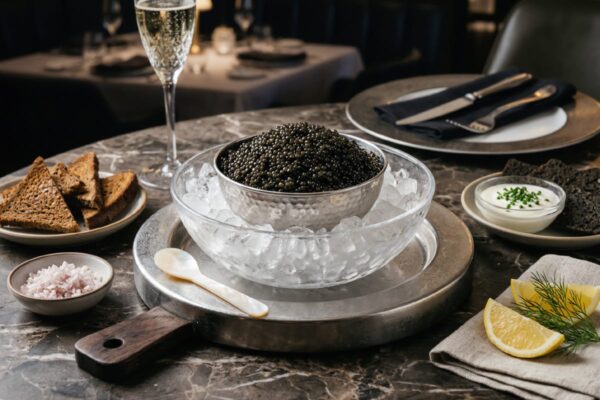
Pro tip: Store malossol caviar on the bottom shelf of the refrigerator, where temperatures stay most stable. Place the tin on a bed of crushed ice for service but avoid leaving it at room temperature for more than 15 minutes.
Shelf life and flavor profile compared between malossol and pasteurized methods
The trade-off between malossol and pasteurized methods is direct. Malossol black caviar has a shorter shelf life but a richer, more layered flavor. Pasteurized caviar lasts longer but sacrifices aromatic complexity. The table below shows the key differences.
| Feature | Malossol black caviar | Pasteurized caviar |
|---|---|---|
| Salt content | 3%–5% | 3%–5% (similar) |
| Heat treatment | None | 60°C for set period |
| Flavor complexity | High, layered, mineral | Flat, consistent, salty-forward |
| Shelf life (unopened) | 4–6 weeks at 28–32°F | Up to 12 months at refrigeration |
| Texture | Firm, intact membrane | Slightly softer |
| Best use | Fine dining, tasting | Mass distribution, catering |
Chefs working in Michelin-starred kitchens consistently choose fresh malossol caviar for tasting presentations because the flavor differences are immediately apparent on the palate. Pasteurized caviar works well for dishes where caviar plays a supporting role, but it cannot replicate the finish and depth of a properly cured, heat-free malossol product.
Malossol black caviar without preservatives at PremiumCaviar
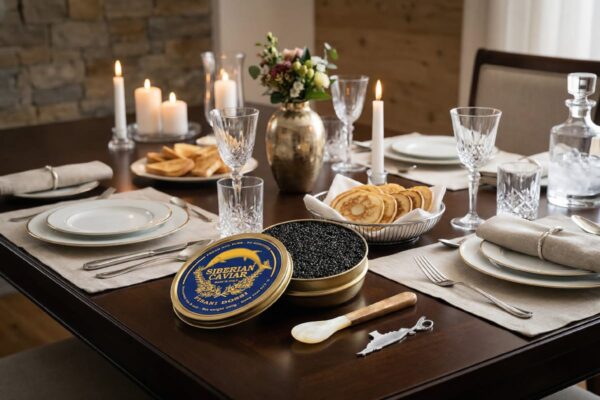
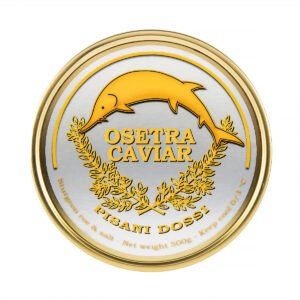
PremiumCaviar sources fresh malossol black caviar directly from the Pisani Dossi farm in northern Italy, a facility known for its organic approach to sturgeon farming. Every product in the range carries no added preservatives and no heat treatment. The roe goes from harvest to sealed tin through a strictly controlled low-salt curing process, keeping all natural flavor compounds intact.
The farm conditions the fish in pure spring water before harvest, then hand-selects each female for processing. This care at the source means every tin carries a consistent egg membrane quality, which is the key factor behind reliable natural flavor retention in sturgeon roe.
Siberian sturgeon and osetra caviar lines
The premium black caviar range covers two main sturgeon lines, each with distinct flavor characteristics.
Caviar selection:
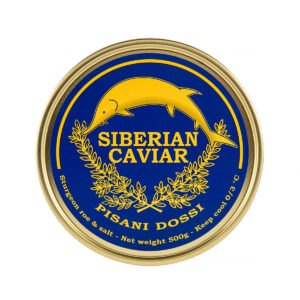
- Premium Siberian Sturgeon Black Caviar — produced from Acipenser baerii, with egg sizes from 2.9 mm to 3.2 mm, a clean flavor profile, and color tones ranging from black-grey to black-brown
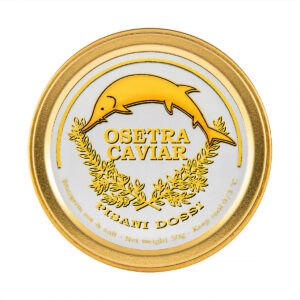
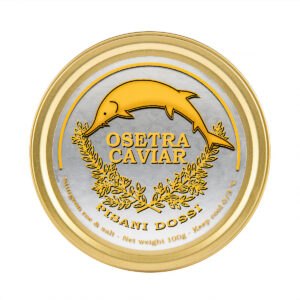
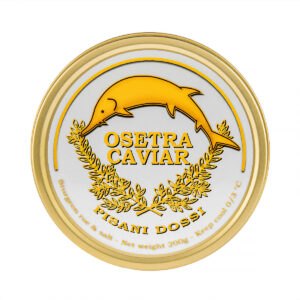
- Premium Osetra Black Caviar — sourced from Acipenser gueldenstaedtii and its hybrid with Siberian sturgeon, with firm, uniform grains and a mild, nutty aftertaste
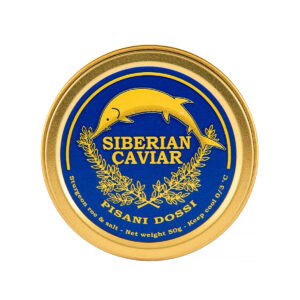
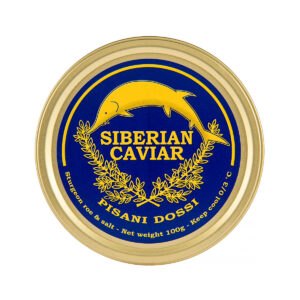
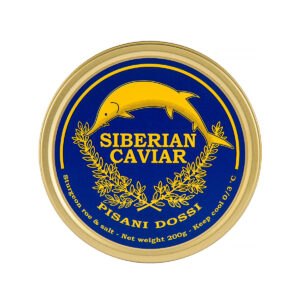
Both lines follow the malossol curing standard with salt content held below 5%, no preservatives, and no pasteurization. Tins are available in 50g, 100g, 200g, and 500g formats to suit both personal and professional use.
Check products in Premium Siberian Sturgeon Black Caviar at PremiumCaviar
Quality standards and client experience
The production method at Pisani Dossi farm centers on three commitments: pure spring water conditioning, individual female selection, and accurate egg preparation before salting. The result is a fresh black caviar that retains its natural taste and firm texture from tin to table.
Clients who have already tried these products share their direct experiences with quality, support, and delivery speed in verified customer reviews. The feedback points consistently to freshness on arrival and professional handling at every step.
For anyone ready to experience preservative-free malossol caviar at its best, the full range is available through the PremiumCaviar shop. The team is also available for consultation, product guidance, and order support. Reach out directly to find the right selection for any occasion.
Check products in Premium Osetra Black Caviar at PremiumCaviar
How sturgeon species and roe quality affect natural flavor retention
Not all sturgeon roe responds to malossol salt curing the same way. The size, fat content, and membrane thickness of the eggs vary between species. These biological differences shape how well flavor survives the curing process and cold storage. Choosing the right salt level for each species requires knowledge of the roe’s physical properties.
The three classic species, beluga, osetra, and sevruga, each produce eggs with distinct structural characteristics. Those differences translate directly into different flavor retention rates after malossol curing. Producers who understand these species-level differences adjust their curing approach accordingly.
Why egg membrane integrity determines how well flavor survives curing
The egg membrane is the physical barrier that holds all flavor compounds inside the roe during curing and storage. A thick, intact membrane keeps volatile aromatics sealed in. A thin or damaged membrane allows those compounds to leach out into the surrounding salt. This is why membrane integrity is the single most important quality indicator at the processing stage.
Eggs harvested from stressed or poorly handled fish often have weakened membranes before curing even begins. Once salt is applied, osmotic pressure acts on every egg equally. A weak membrane ruptures faster, releasing flavor compounds early. This is the main reason high-quality fresh sturgeon roe must be processed within hours of harvest. Delay at this stage directly reduces the flavor that survives into the final tin.
Factors that affect egg membrane integrity:
- Sturgeon health: Stressed fish produce eggs with thinner membranes
- Harvest method: Rough handling at harvest causes micro-tears
- Time from harvest to curing: Longer gaps allow membrane degradation
- Water temperature: Warm water before harvest weakens cell walls
- Salt application speed: Uneven salting creates pressure variations
Producers who prioritize fish welfare, rapid processing, and careful hand-sorting at the curing stage protect membrane integrity from the start. This is what separates high-grade malossol-cured sturgeon roe from mass-produced alternatives.
How beluga, osetra, and sevruga roe respond differently to light salting
Beluga roe produces the largest eggs, with a relatively thin but delicate membrane. The eggs sit at 3 mm to 4 mm in diameter and carry a high fat content. That fat content makes beluga roe rich and buttery, but it also makes it more sensitive to salt. Even a small increase above 4% begins to break down the membrane and release those fatty aromatic compounds. Beluga malossol caviar cured at 3.5% retains a long, creamy finish. Salt above 5% collapses it.
Osetra roe is firmer and medium-sized, ranging from 2 mm to 3 mm. The membrane is thicker relative to egg size, which means osetra handles a slightly wider salt range without losing its nutty, sea-mineral flavor. Osetra cured at 4% develops a concentrated, complex taste profile because the membrane holds aromatic compounds tightly during curing.
Sevruga produces the smallest eggs, under 2 mm, with the thinnest membranes of the three classic species. The eggs are structurally more fragile and require the fastest processing after harvest. Sevruga roe is naturally bolder and more assertive in flavor, with high natural salinity. Even at 3% added salt, the taste is sharp and direct. Membrane damage during curing causes sevruga to turn bitter fast, which is why careful hand-curing matters most for this species.
Pro tip: When comparing species at tasting, start with beluga, then move to osetra, and finish with sevruga. This order goes from most delicate to most assertive, which lets each flavor profile register clearly without the previous one masking the next.
FAQ: Frequently Asked Questions
What does “malossol” mean, and why does it matter for black caviar flavor?
The word malossol comes from Russian and translates directly as “little salt.” In caviar production, it refers to a curing method that uses no more than 5% salt by total weight of the roe. Most high-grade producers target a range of 3.5% to 4%, a level that slows bacterial growth without overwhelming the natural taste of the eggs.
At this low concentration, salt-cured sturgeon roe keeps its buttery, mineral, and briny notes intact. The salt draws excess moisture out of each egg through osmosis, concentrating the aromatic compounds inside rather than flushing them away. This is why the malossol method consistently produces a cleaner, more layered flavor than any heavily salted alternative.
How long does malossol black caviar stay fresh without chemical preservatives?
An unopened tin of fresh malossol caviar stored at 28°F to 32°F typically stays at peak quality for 4 to 6 weeks from the packing date. The combination of low salt content, vacuum sealing, and near-freezing temperatures removes the conditions bacteria and enzymes need to cause spoilage. No chemical additives are required when all three factors stay in place throughout the cold chain storage period.
Once a tin is opened, oxygen immediately begins breaking down the aromatic fat compounds in the roe. Flavor and texture degrade fast. An opened tin must be consumed within 2 to 3 days under proper refrigeration. Delaying consumption beyond that window results in a noticeably sharper, fishier taste as lipid oxidation advances.
Freezing extends shelf life but damages the egg membranes upon thawing, turning the texture soft and grainy. For preservative-free black caviar, the cold but unfrozen storage range is the only method that maintains both safety and quality simultaneously.
Why does malossol caviar not need pasteurization to stay safe?
Malossol-processed black caviar relies on three natural barriers working together: salt, cold temperature, and airtight packaging. Salt reduces the water activity inside and around the eggs, cutting off the moisture that bacteria need to reproduce. Temperature held at 28°F to 32°F slows enzymatic activity in the roe itself, which would otherwise break down proteins and produce off-flavors within days.
Vacuum-sealed tins remove oxygen, which stops lipid oxidation from producing the rancid compounds that signal spoilage. Together, these three controls create a stable environment that eliminates the need for heat treatment. Pasteurization adds safety margin for longer shelf life, but it also destroys heat-sensitive volatile aroma compounds that carry the signature flavor of quality sturgeon roe. Choosing the malossol method means accepting a shorter shelf life in exchange for a fully intact flavor profile.
How do different sturgeon species affect the natural flavor retention of malossol caviar?
Each classic sturgeon species produces roe with distinct physical properties that directly shape how well flavor survives malossol curing. Beluga eggs are the largest, ranging from 3 mm to 4 mm, with a high fat content and a relatively delicate membrane. That fat content makes beluga roe rich and creamy, but the thin membrane makes it more sensitive to even small increases in salt concentration above 4%.
Osetra roe is medium-sized, around 2 mm to 3 mm, with a thicker membrane relative to egg size. The structural strength of the membrane allows osetra caviar to hold its nutty, mineral-forward aromatic compounds tightly during curing. Sevruga produces the smallest eggs, under 2 mm, with the thinnest membranes of all three species.
Sevruga roe is naturally bold and assertive in flavor, with high natural salinity, and it requires the fastest processing after harvest. Membrane damage during curing causes sevruga to turn bitter rapidly. The egg membrane integrity of each species determines how much flavor survives from harvest to the finished tin.
Conclusion
Malossol black caviar retains its flavor without preservatives because three interconnected systems work together: precise low-salt curing, strict cold chain control, and airtight packaging. Salt at 3%–5% slows bacteria and concentrates aromatic compounds inside intact egg membranes. Temperature held at 28°F–32°F stops enzymatic activity that would otherwise break down flavor over days. Vacuum-sealed tins cut off the oxygen that drives lipid oxidation. Remove any one of these three, and the flavor the roe carried at harvest is lost before the tin reaches the table.
The absence of heat in malossol curing is what separates this method from pasteurized alternatives. Heat kills bacteria but also destroys the volatile compounds responsible for the layered, mineral-forward taste that defines quality black caviar flavor retention. The malossol process accepts a shorter shelf life in exchange for preserving everything that makes sturgeon roe worth eating. Species choice adds another layer. Beluga, osetra, and sevruga each require a slightly different approach at the curing stage, because egg size, membrane thickness, and natural fat content all change how the roe responds to salt. Matching the curing approach to the species is what produces the clean, accurate flavor that reaches the consumer’s palate exactly as nature and the processor intended.
Sources:
- https://en.wikipedia.org/wiki/Caviar
- https://en.wikipedia.org/wiki/Pasteurization
- https://en.wikipedia.org/wiki/Malosol
- https://pubmed.ncbi.nlm.nih.gov/20492148/
- https://pubmed.ncbi.nlm.nih.gov/38309899/
- https://pubmed.ncbi.nlm.nih.gov/41548274/
- https://pmc.ncbi.nlm.nih.gov/articles/PMC8070692/
- https://pmc.ncbi.nlm.nih.gov/articles/PMC12509112/
- https://pmc.ncbi.nlm.nih.gov/articles/PMC12648089/
- https://www.schinafish.cn/en/article/doi/10.12131/20250167
- https://doaj.org/article/3fb33ec4ed9346d290cf02f73a6cba56
- https://www.sciencedirect.com/science/article/abs/pii/S0924224425000445