
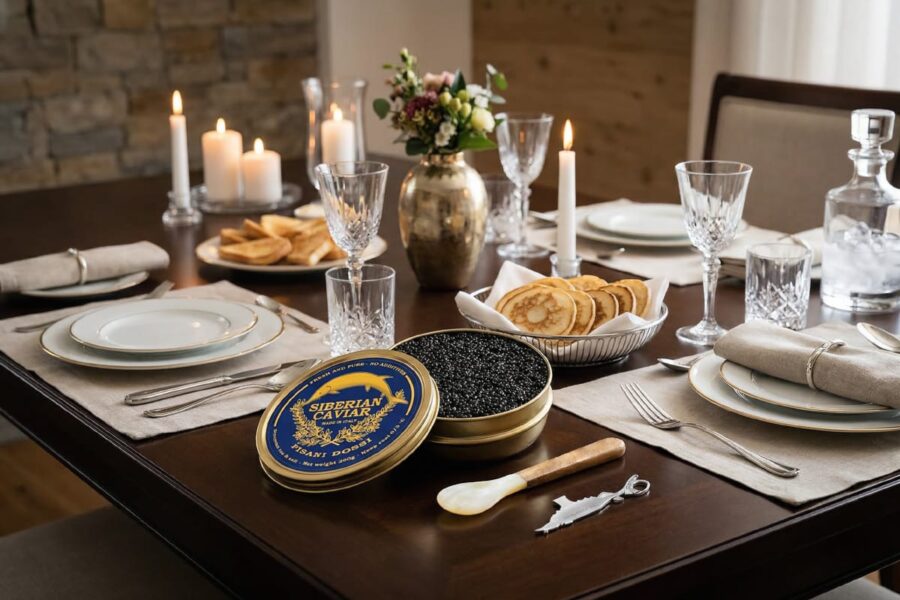
Few delicacies carry the history and prestige of Siberian sturgeon black caviar. This ancient fish, known scientifically as Acipenser baerii, has thrived in cold Siberian rivers for millions of years. Its roe stands apart for its depth of flavor, rich lipid content, and striking dark color.
What makes this fish so special is not one single factor. It is a combination of biology, habitat, and careful harvesting that produces roe of such high caliber. The slow pace of its life cycle, the cold waters it inhabits, and its natural benthic feeding habits all contribute to the quality of its eggs.
The global demand for Siberian sturgeon roe has risen steadily as wild Caspian stocks have declined. Aquaculture has stepped in to meet this demand while preserving the species. Understanding why this particular sturgeon produces such fine roe begins with a close look at the fish itself.
Why does Acipenser baerii produce distinctively rich black roe?
The answer lies deep in the biology of Acipenser baerii. This species carries traits shaped over millions of years in one of the world’s harshest environments. Cold temperatures, seasonal food cycles, and long lifespans all press the fish to store energy in its eggs at a level few other species match.
How cold Siberian river habitats shape roe lipid composition
Acipenser baerii is native to the Ob, Yenisei, Lena, and Amur river systems of Siberia, where water temperatures stay cold for most of the year. Cold water pushes fish to accumulate high concentrations of unsaturated fatty acids in their tissues and eggs. This is a survival mechanism. Unsaturated fats remain fluid at low temperatures, keeping cell membranes functional.
Research published in the Journal of Food and Nutrition Research confirmed that Siberian sturgeon eggs are rich in lysophosphatidylcholine and contain significant levels of EPA (eicosapentaenoic acid) and DHA (docosahexaenoic acid). These are the two omega-3 fatty acids most closely linked to the creamy texture and complex taste of high-grade roe.
The cold-water origin directly shapes the sturgeon roe fat profile. Fish raised in warmer conditions produce eggs with a different lipid balance, often lower in the unsaturated fats that give fine caviar its characteristic richness. This is why the natural Siberian habitat remains a reference point, even in modern aquaculture.
The role of slow maturation and long reproductive cycles in roe quality
Siberian sturgeon are slow to reach sexual maturity. In the wild, females do not produce eggs until they are between 10 and 20 years old. Even in controlled aquaculture, the maturation period runs at least 8 to 10 years before a female yields caviar-quality roe.
This long timeline works in favor of quality. As the fish matures, its eggs accumulate proteins, lipids, and minerals over many years. Roe from a younger fish simply lacks the same depth of flavor and nutritional density. The wait is built into the biology of the species.
Once mature, a female Acipenser baerii can produce over 400,000 eggs in a single spawn. The volume is significant, but it comes only after years of careful biological preparation. This slow, deliberate reproductive cycle is a key reason Siberian sturgeon caviar ranks among the finest roes in the world.
How benthic feeding on crustaceans and larvae builds flavor depth
Acipenser baerii is a bottom-feeding fish. In its natural habitat, it feeds on invertebrates, insect larvae, small crustaceans, worms, and mollusks along the riverbed. This benthic diet is rich in amino acids and trace minerals, which transfer directly into the flavor profile of the roe.
The varied diet of wild Siberian sturgeon contributes to the earthy, slightly briny taste that distinguishes its caviar. The minerals and organic compounds absorbed from a diverse riverbed diet accumulate in the fish’s tissues over years. This gives the eggs a layered, complex flavor that farmed fish fed on uniform pellets cannot fully replicate.
Dietary composition influences not just flavor but also the fatty acid profile of the roe. Studies show that diets rich in crustaceans and invertebrates correlate with higher concentrations of omega-3 fatty acids in sturgeon eggs. The benthic feeding habit of Acipenser baerii is a direct biological contributor to roe quality factors.
Genetic traits of Acipenser baerii that separate it from other sturgeon species
Acipenser baerii belongs to one of the oldest vertebrate lineages on Earth. Its genome carries duplications not found in most modern fish, giving it a complex biochemical toolkit. These genetic traits support the fish’s ability to synthesize specific fatty acids, metabolize diverse nutrients, and store energy efficiently in its gonads.
Compared to Sevruga sturgeon, Acipenser baerii produces larger eggs with a firmer shell and a richer lipid content. Compared to Beluga, its roe matures more consistently in aquaculture conditions. The genetic makeup of the species strikes a natural balance between egg size, fat content, and flavor complexity.
Key genetic advantages of Acipenser baerii:
- Efficient lipid synthesis from plant and invertebrate-based food sources
- Stable egg membrane proteins that support firm bead texture
- Adaptability to cold water, supporting high unsaturated fat accumulation
- Longer productive lifespan compared to smaller sturgeon species
These traits make Acipenser baerii particularly well suited to both wild harvesting and controlled aquaculture. The species reliably produces roe with consistent quality, bead integrity, and flavor depth across different farming conditions.
How caviar grading standards classify Siberian sturgeon roe
Grading Siberian sturgeon roe is a precise process. Experts evaluate each batch across several physical and sensory dimensions. The final grade determines how the caviar is packaged, stored, and served. A clear grading system helps producers and buyers communicate quality with accuracy.
Bead size, color, and shell integrity as primary quality indicators
Bead size is the first visual marker of quality. For Acipenser baerii, eggs typically measure between 2.5 and 3.5 mm in diameter. Larger beads from more mature fish signal higher quality. Graders measure size with standardized sieves to ensure consistency across a batch.
Color is evaluated for uniformity and depth. Siberian sturgeon roe ranges from dark charcoal gray to deep black. Uniform color across a tin indicates proper maturation and careful processing. Variations in shade within a single batch can signal mixed maturation stages or processing inconsistencies.
Shell integrity is equally critical. Each egg must remain fully intact, with no visible breaks or soft spots. A compromised shell releases the egg’s contents prematurely, degrading both flavor and texture. Grade 1 caviar requires every bead to hold its form from processing to the moment it reaches the table.
How texture firmness and mouthfeel determine premium grade roe
Texture is perhaps the most sensory aspect of caviar grading. Premium black caviar roe should be firm enough to resist light pressure but tender enough to burst cleanly on the palate.
Graders press individual beads gently between their fingertips. The egg should offer resistance before releasing. An egg that collapses without resistance is too soft. An egg that resists breaking entirely may have been processed with excess salt. Both extremes indicate lower quality.
Mouthfeel encompasses the full experience: the initial resistance, the clean pop, and the way the flavors spread across the tongue. Grade 1 Siberian caviar texture delivers a clean burst followed by a long, smooth finish. Grade 2 roe still tastes excellent but delivers a slightly less defined mouthfeel.
Flavor evaluation criteria: salinity balance, finish, and complexity
Flavor grading follows strict sensory protocols. Trained evaluators assess three primary dimensions: the salt level, the length of the finish, and the layered complexity of the taste.
Caviar grading flavor criteria evaluated by experts:
- Salinity balance — salt should accent flavor, not mask it
- Initial flavor clarity — the first taste should be clean and defined
- Finish length — premium roe leaves a lasting, pleasant aftertaste
- Complexity — multiple flavor layers signal mature, well-processed roe
- Off-flavor absence — no fishiness, bitterness, or rancid notes
The salinity level in well-graded Acipenser baerii roe typically falls between 3% and 5% salt by weight, following the Malossol standard. Malossol, a Russian term meaning “little salt,” describes minimal salting that preserves the natural roe flavor without overpowering it. This low-salt approach defines the highest tier of caviar processing worldwide.
How sustainable aquaculture preserves Siberian sturgeon roe quality
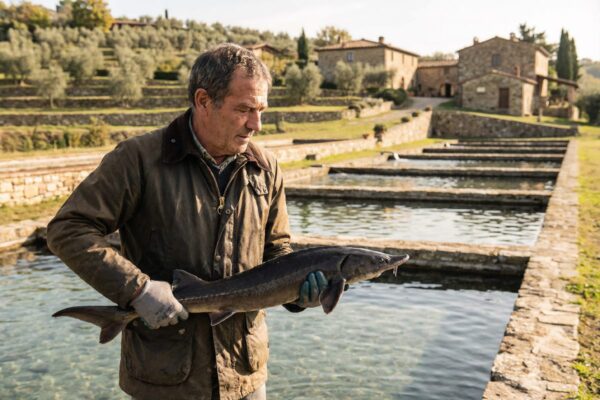
Wild Siberian sturgeon populations have faced serious pressure from overfishing, habitat loss, and dam construction across Siberian river systems. Aquaculture has become the primary source of legal, traceable Siberian sturgeon caviar globally. The methods used in modern fish farming directly affect whether the roe matches the quality of wild-harvested eggs.
Sustainable caviar farming demands attention to water quality, diet, fish stress levels, and genetic diversity. Each factor connects directly to the final quality of the roe. Farms that neglect any one of these areas produce caviar that falls short of the premium standard.
Recirculating aquaculture systems and water quality control in farming
Recirculating aquaculture systems, known as RAS, have become the standard for premium sturgeon aquaculture. In an RAS setup, up to 99% of the water is filtered and reused within the system. This dramatically reduces water consumption while maintaining precise control over temperature, oxygen levels, and water chemistry.
For Acipenser baerii, water temperature control is particularly important. The fish performs best in cool water between 18 and 22 degrees Celsius. RAS allows farms to replicate the cold, clean conditions of Siberian rivers year-round, regardless of the surrounding climate.
RAS also reduces the risk of pathogen exposure. In open water systems, fish come into contact with naturally occurring bacteria and parasites. In a closed RAS, biosecurity is high, and the fish experience fewer health disruptions. Healthier fish under consistent conditions produce more uniform, higher-quality roe.
How controlled diet and stress reduction affect roe fat profile
Diet in aquaculture directly shapes the caviar fat profile. Studies on Acipenser baerii show that diets rich in fish meal and plant-based oils containing linoleic and alpha-linolenic acids support high DHA and EPA levels in the eggs. Farms that invest in carefully formulated feed produce roe with a lipid profile closer to wild-caught standards.
Stress is another factor. When sturgeon experience crowding, temperature swings, or poor water quality, cortisol levels rise. Elevated stress hormones interfere with normal egg development and reduce the quality of the final roe.
Farms committed to premium roe keep stocking densities low, maintain stable water conditions, and reduce handling to a minimum. These measures cost more but produce caviar with better bead integrity, richer flavor, and a cleaner finish.
For the most consistent Siberian sturgeon roe fat profile, farms should feed adult females a high-DHA diet for at least 12 months before harvest. This pre-harvest nutrition window directly raises omega-3 levels in the eggs and improves flavor depth.
Conservation breeding practices and genetic diversity in farmed stocks
Genetic diversity in farmed Acipenser baerii stocks is a critical concern. When farms breed from a small number of parent fish repeatedly, inbreeding reduces the genetic resilience of the population. Over generations, this leads to weaker immune systems, lower reproductive rates, and less consistent roe quality.
Conservation-focused farms maintain large broodstock populations drawn from multiple geographic lineages. Some facilities collaborate with research institutions to preserve genetic lines from different Siberian river systems. This approach keeps the gene pool broad and supports the long-term health of farmed stocks.
Conservation breeding methods used in Siberian sturgeon farms:
-
Multi-lineage broodstock drawn from distinct river populations
-
Cryopreservation of sperm and eggs for long-term genetic storage
-
Selective breeding for roe quality traits without narrowing genetic range
-
Collaboration with wildlife agencies to support wild population recovery
Maintaining genetic diversity does more than protect the species. It directly supports roe quality. Fish from genetically diverse stocks show stronger growth rates, better feed conversion, and more consistent egg characteristics. The investment in genetic management pays off in every tin of Siberian caviar that reaches the consumer.
Pro tip: Farms aiming for Grade 1 Siberian sturgeon black caviar should audit their broodstock genetic profiles every five years. Introducing new lineages prevents quality drift and keeps roe characteristics stable across production cycles.
Where to find authentic Siberian sturgeon black caviar
Siberian sturgeon black caviar carries a reputation built on biology, patience, and careful farming. Finding roe that genuinely reflects these qualities requires a supplier with traceable sourcing and rigorous standards. PremiumCaviar is a specialist caviar retailer that sources its products exclusively from Pisani Dossi, a sturgeon farm established in 1982 in the Southern Agricultural Park near Milan, Italy.
Pisani Dossi raises Acipenser baerii in clean, certified water using traditional hand-processing methods. The caviar arrives fresh, without preservatives, and with salt content kept strictly at the Malossol standard of 3.5 to 4%. This sourcing model gives every tin a direct, verifiable link from farm to consumer.
Fresh black caviar sourced directly from Pisani Dossi
The premium black caviar selection at PremiumCaviar reflects the quality standards Pisani Dossi has maintained for over four decades. Each batch is hand-selected, processed fresh after order placement, and never frozen.
Key qualities that define these products:
- Fresh processing on demand — caviar is prepared only after an order is placed
- No preservatives or additives of any kind
- Malossol salting at 3.5 to 4%, preserving the natural roe flavor
- CITES certification, confirming legal and traceable sourcing
This approach means the roe that reaches the table retains its natural bead firmness, clean flavor, and full omega-3 fatty acid content. Fresh caviar processed without chemical preservation delivers a noticeably cleaner taste than pasteurized alternatives.
Check products in Premium Siberian Sturgeon Black Caviar at PremiumCaviar
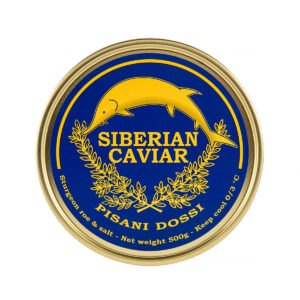
Siberian and Osetra caviar available for order
Two distinct product lines cover the main flavor profiles sought by caviar enthusiasts. The premium Siberian sturgeon black caviar comes from Acipenser baerii and features dark gray beads between 2.6 and 3.0 mm. The flavor is mild and clean, with a light hazelnut finish that makes it accessible and food-friendly.
For those drawn to a richer, more layered taste, the premium Osetra black caviar comes from a hybrid of Russian and Siberian sturgeon. Its beads range from pearl gray to amber, with a deeper walnut-like finish and a slightly larger grain. Both lines follow the same fresh, preservative-free processing standard.
Customers who have ordered directly share their experience with the products, service quality, and delivery speed through verified client reviews. The feedback reflects consistent satisfaction with roe quality and fast shipping.
Reach out to PremiumCaviar directly for personal consultation on selecting the right roe, tin size, or serving occasion. Fresh Siberian sturgeon black caviar in the proper Malossol tradition is one order away.
Check products in Premium Osetra Black Caviar at PremiumCaviar
What makes Siberian sturgeon black caviar stand out among fine roes
Among all the fine roes available today, Siberian sturgeon black caviar occupies a distinct position. It is neither the largest nor the rarest, but its combination of flavor, texture, and nutritional richness makes it a consistent benchmark for quality.
Nutty, buttery, and umami flavor notes compared to Osetra and Beluga
The flavor profile of Siberian sturgeon caviar is earthy and briny, with a clean, slightly nutty finish. It lacks the intense butteriness of Beluga but carries more mineral depth than Sevruga.
| Feature | Siberian (A. baerii) | Osetra (A. gueldenstaedtii) | Beluga (Huso huso) |
|---|---|---|---|
| Egg size | 2.5–3.5 mm | 2.5–3.5 mm | 3.5–4.5 mm |
| Color | Charcoal gray to black | Dark amber to gold-brown | Light to dark gray |
| Flavor | Earthy, briny, nutty | Nutty, buttery, complex | Buttery, creamy, smooth |
| Texture | Firm, clean pop | Firm, silky | Soft, melting |
| Maturation (farm) | 8–10 years | 10–12 years | 12–18 years |
The umami depth in Acipenser baerii roe comes from its high free amino acid content, particularly glutamate. This savory quality gives the caviar a satisfying roundness that lingers on the palate. Many chefs and tasters describe it as the most “food-friendly” of the premium caviars, pairing well with a wide range of accompaniments.
Beluga holds a reputation for the smoothest, most delicate taste. Osetra is prized for its layered complexity. Siberian sturgeon sits between the two, with a more assertive mineral quality and a firmer bead. For those who prefer a black caviar flavor profile with character and texture, Acipenser baerii is the natural choice.
Omega-3 fatty acid content and nutritional value of sturgeon roe
Siberian sturgeon roe is a concentrated source of nutrition. A 30-gram serving contains substantial levels of DHA and EPA omega-3 fatty acids, along with high-quality protein, vitamins B12 and D, and minerals including selenium, iron, and magnesium.
Research comparing sturgeon caviar to salmon roe found that sturgeon eggs carry a higher proportion of DHA relative to total lipid content. DHA plays a central role in brain function, cardiovascular health, and inflammation regulation. The omega-3 content in sturgeon caviar makes it one of the most nutritionally dense animal foods available.
The nutritional richness of Acipenser baerii eggs reflects the same biological processes that make the roe taste exceptional. High lipid content, diverse amino acids, and a rich mineral profile are not just flavor contributors. They represent the stored biological energy of a fish that has taken years to mature. Every quality element in the tin traces back to the biology of the species itself.
Pro tip: Serve Siberian sturgeon black caviar at between 2 and 4 degrees Celsius and consume within 15 minutes of opening. Warmer temperatures cause the fat in the eggs to oxidize faster, which softens the bead and dulls the flavor profile noticeably.
FAQ: Frequently Asked Questions
What biological traits make Siberian sturgeon roe richer than most other fish eggs?
Acipenser baerii has evolved in the cold river systems of Siberia, where water temperatures stay low for most of the year. Cold-water conditions press the fish to store high concentrations of unsaturated fatty acids in its tissues and eggs. These fats, particularly DHA and EPA, remain fluid at low temperatures and are the main reason Siberian sturgeon roe feels so rich and smooth on the palate.
The fish also has an unusually long maturation cycle. Over many years, its eggs accumulate proteins, minerals, and lipids at levels that faster-maturing species simply cannot match. The benthic feeding habits of Acipenser baerii, which include invertebrates, small crustaceans, and worms from the riverbed, further build the amino acid and mineral profile of the eggs. These biological advantages combine to produce black caviar with layered flavor and dense nutritional content that few other roe types can equal.
How long does Siberian sturgeon take to produce caviar-quality roe?
In aquaculture conditions, Siberian sturgeon females begin producing caviar-quality roe after about 7 to 10 years, depending on water temperature, diet, and farm management. This is faster than Russian sturgeon, which needs 10 to 12 years, and far shorter than Beluga, which can take 15 to 20 years to mature.
This relatively shorter cycle makes Acipenser baerii attractive for sustainable sturgeon farming, yet the wait remains long enough for the eggs to develop the lipid density and flavor complexity expected of fine roe. Farms that manage water temperature carefully, keeping conditions cool and stable, often report that roe quality improves when fish are not pushed to mature too quickly. The slow maturation period is not a limitation. It is precisely what gives the eggs their depth and quality.
What does Siberian sturgeon caviar taste like, and how does it compare to Osetra?
The flavor profile of Siberian sturgeon caviar is earthy and briny, with a clean mineral finish and clear nutty undertones. The beads are firm and deliver a defined pop. After breaking on the palate, the flavor spreads smoothly and lingers with a subtle richness.
Compared to Osetra, which comes from Acipenser gueldenstaedtii, the Siberian variety tends to be bolder and more mineral-forward. Osetra carries a softer, more buttery character with greater flavor complexity at the higher grades. Both species produce eggs of similar size, typically between 2.5 and 3.5 mm, but the Siberian caviar taste is considered more assertive. For those who prefer a roe with pronounced character and a firm texture, Acipenser baerii caviar is the more direct choice. Osetra suits those who favor subtlety and a longer, creamier finish.
Is farmed Siberian sturgeon caviar as good as wild-harvested roe?
Wild Siberian sturgeon are listed as a critically endangered species by the International Union for Conservation of Nature, and commercial wild harvesting is now banned or heavily restricted across most of their native range. As a result, virtually all Siberian sturgeon black caviar available today comes from aquaculture farms.
Modern farms using recirculating aquaculture systems maintain precise control over water temperature, oxygen levels, and feed composition. When diets are formulated to include high levels of DHA-rich ingredients, and fish are kept in cool, clean water with low stress, farmed Siberian sturgeon roe closely matches the nutritional and flavor profile of wild-harvested eggs. Long-term studies confirm that well-managed aquaculture produces caviar with consistent bead firmness, stable lipid content, and clean flavor. Sustainable caviar farming has not just replaced wild harvesting. In many measured quality parameters, it has matched it.
Conclusion
The quality of Siberian sturgeon black caviar is not accidental. It results from millions of years of biological adaptation to cold, nutrient-rich river environments, a slow reproductive cycle that concentrates nutrients in the eggs, and a benthic diet that builds complex flavor over time. The genetic traits of Acipenser baerii set the biological foundation. The cold Siberian rivers shaped everything else.
Modern aquaculture has made this roe more accessible without sacrificing the core qualities that define it. RAS technology, careful diet management, and conservation breeding all work together to preserve the roe quality factors that make this species exceptional. Farms that follow rigorous standards produce caviar that holds its own against the finest wild-harvested roe.
The grading standards, nutritional profile, and distinctive flavor of Siberian sturgeon caviar reflect a product shaped by time, biology, and careful stewardship. Whether served at a fine dining table or evaluated in a production facility, this roe earns its standing through measurable, verifiable qualities rooted in the nature of Acipenser baerii itself.
Sources:
- https://en.wikipedia.org/wiki/Siberian_sturgeon
- https://www.fishbase.se/Fieldguide/FieldGuideSummary.php?genusname=Acipenser&speciesname=baerii&c_code=643
- https://cites.org/sites/default/files/eng/com/ac/16/16-7-2a1.pdf
- https://pmc.ncbi.nlm.nih.gov/articles/PMC11350799/
- https://pmc.ncbi.nlm.nih.gov/articles/PMC9702528/
- https://pubs.sciepub.com/jfnr/10/10/2/index.html
- https://pubs.sciepub.com/jfnr/1/5/5/
- https://pubmed.ncbi.nlm.nih.gov/24767029/
- https://pmc.ncbi.nlm.nih.gov/articles/PMC8076456/
- https://www.nature.com/articles/s41598-020-80379-x
- https://biotechnology.kiev.ua/index.php/en/journal-archive-en/2023-en/2023-no-1-en/determining-of-nutritional-value-of-caviar-of-siberian-sturgeon-in-ukraine
- https://www.globalseafood.org/advocate/sturgeon-aquaculture-and-conservation-trends/
- https://www.sciencedirect.com/article/abs/pii/S1546509822000139
- https://acgpubs.org/doc/20240705155245A4-86-RAFC-2403-3161.pdf
- https://www.frontiersin.org/journals/animal-science/articles/10.3389/fanim.2024.1432765/full
- https://www.fao.org/fishery/docs/CDrom/aquaculture/I1129m/file/en/.!32635!en_acipenser_old.htm
- https://www.sciltp.com/journals/ale/articles/2512002585