
The way people choose food has changed. Across fine dining tables and home kitchens alike, preservative-free black caviar is drawing more attention than ever before. Food lovers want to know exactly what goes into their food, and caviar is no exception.
Clean eating is not a passing trend. A shift toward natural, minimally processed foods has reshaped how gourmet products are judged. Additive-free black caviar sits at the center of this change, offering a product that is closer to nature and richer in genuine flavor. The push for transparency on ingredient labels is pushing more buyers toward caviar produced without chemical preservatives, borax, or artificial stabilizers.
This demand connects directly to a broader story about trust, authenticity, and nutrition. As sturgeon farming practices grow more traceable and certifications become clearer, more food lovers feel confident choosing natural black caviar over treated alternatives. The result is a market that is shifting fast toward cleaner, more honest products.
What makes preservative-free black caviar different from treated varieties
Not all caviar is made equal. The processing method used after harvest plays a major role in the final product’s taste, texture, and nutritional value. Preservative-free black caviar undergoes minimal intervention during production, which is precisely what sets it apart from pasteurized or chemically treated versions.
Standard treated caviar often contains borax, sodium benzoate, or other chemical additives that extend shelf life but alter the natural taste profile of the roe. Additive-free sturgeon caviar, on the other hand, relies on traditional techniques that have been trusted for centuries.
How natural black caviar is processed without chemical additives
The production of natural black caviar begins right after harvest. Eggs are rinsed, graded, and mixed with a precise amount of fine salt. No artificial colors, flavor enhancers, or chemical preservatives enter the process at any stage.
Cold temperature control plays an equally important role. The roe is packed at near-freezing temperatures and sealed in airtight containers. This method maintains both safety and freshness without relying on any synthetic stabilizers. The result is a product that reaches the consumer in its most authentic state.
Why salt alone preserves authentic sturgeon roe quality
Salt has been a natural food preservative for thousands of years. In traditional caviar curing, it draws out moisture, slows bacterial growth, and acts as a gentle flavor enhancer at the same time.
When used at the right concentration, salt works without masking the roe’s natural taste. Malossol black caviar typically contains between 2.7% and 5% salt by weight, which is low enough to preserve without overpowering. This precise salt balance is what allows the delicate, oceanic flavor of the eggs to remain intact.
How clean-label black caviar retains its original flavor profile
Chemical preservatives change more than shelf life. Many additives alter the texture of roe, making the eggs firmer or changing the way they burst on the palate. Clean-label caviar avoids these effects by keeping the ingredient list as short as possible: roe and salt, nothing more.
The absence of borax is a key point here. Borax reduces the salt level needed for preservation, but it also softens the eggs in a way that affects texture and perceived freshness. Preservative-free gourmet caviar maintains the firm, distinct pop that experienced food lovers associate with quality.
Flavor-active compounds in the roe, including amino acids and fats, remain stable when no chemical agents are present. This preservation of the natural chemistry of the egg is what gives authentic, untreated caviar its distinct depth of taste.
What traditional malossol method means for additive-free caviar
The word “malossol” comes from Russian and translates directly as “little salt.” This malossol processing method is widely regarded as the gold standard for high-quality caviar production worldwide.
| Processing Method | Salt Content | Additives Used | Shelf Life (Refrigerated) |
|---|---|---|---|
| Malossol (natural) | 2.7%–5% | None | 4–6 weeks |
| Semi-preserved | ~8% | Sometimes borax | Up to 6 months |
| Pasteurized | 3%–5% | Heat-treated | Up to 12 months |
Malossol caviar is packed at low salt levels without heat treatment or chemical additives. This keeps the eggs in a near-fresh state, giving the product a flavor profile that pasteurized or pressed varieties simply cannot match.
Authentic malossol caviar requires strict cold chain management from production to consumption. The low salt content means the product is more delicate, which is exactly why producers who follow this method are trusted by serious food lovers.
Why health-conscious food lovers are choosing natural black caviar
The rise of health-conscious eating has drawn more attention to what black caviar actually contains. As a natural food product, sturgeon roe is packed with nutrients that processed alternatives lack. Removing chemical preservatives from caviar means the body receives these nutrients in a cleaner, more direct form.
Nutritional integrity is a central reason why food enthusiasts are choosing natural versions over treated ones. The nutritional composition of caviar is strong on its own. Adding preservatives or heat during processing can degrade some of those nutrients, making the case for additive-free black caviar even stronger.
How omega-3 fatty acids in black caviar support cardiovascular health
Black caviar is one of the richest natural sources of omega-3 fatty acids. A 100-gram serving contains approximately 7 grams of total omega-3s, including around 4 grams of DHA and 3 grams of EPA. These fatty acids are directly linked to reduced inflammation in blood vessels and better cardiovascular function.
Omega-3 rich caviar eaten as part of a balanced diet supports healthy cholesterol levels and helps regulate blood pressure over time. Studies consistently connect high omega-3 intake with a lower risk of cardiovascular disease, making natural, unprocessed caviar a meaningful addition to a heart-healthy diet.
Key nutrients in black caviar per 100 grams:
- Total omega-3 fatty acids: 7 g (DHA 4 g, EPA 3 g)
- Protein: 25 g (approximately 30% easily digestible)
- Vitamin B12: 20 µg (833% of daily value)
- Selenium: 66 µg (119% of daily value)
- Magnesium: 300 mg (71% of daily value)
- Choline: 491 mg (89% of daily value)
This nutrient density makes natural black caviar one of the most concentrated whole-food sources of essential micronutrients available. One small serving delivers a broad spectrum of vitamins and minerals that support multiple body systems at once.
Why preservative-free caviar offers a cleaner nutritional composition
Preservatives added to food products interact with the body in ways that natural ingredients do not. Sodium benzoate and similar additives have been studied for potential negative effects on cell function when consumed regularly. Choosing preservative-free black caviar removes these compounds entirely from the equation.
The clean composition of natural sturgeon roe means the body receives only what the food naturally contains: proteins, fats, vitamins, and minerals. There is no need to process or filter out synthetic compounds. For buyers who read ingredient labels carefully, a caviar that lists only “sturgeon roe” and “salt” stands as a mark of purity.
How removing additives affects the bioavailability of caviar nutrients
Bioavailability refers to how much of a nutrient the body can actually absorb and use. Heat treatment and chemical additives used in caviar preservation can degrade heat-sensitive vitamins and alter the structure of fatty acids.
Vitamin B12 in black caviar is particularly sensitive to heat. Pasteurization, while effective for shelf life, reduces the concentration of this vitamin in the final product. Cold-processed, additive-free caviar retains B12 at its natural level, which is 833% of the recommended daily intake per 100 grams.
Fat-soluble vitamins A, D, and E are better absorbed alongside the natural fats present in caviar. When these fats remain intact and unaltered by processing, the absorption of these vitamins improves. Minimally processed caviar preserves this natural synergy between nutrients.
How the clean-label food movement is reshaping gourmet caviar demand
The clean-label food movement has moved from a niche concern to a mainstream purchasing driver. Across global markets, consumers are choosing products with fewer, more recognizable ingredients. This shift has reached the gourmet food sector, where natural black caviar is now seen as the cleaner choice among luxury products.
Caviar producers are responding. Those who follow additive-free processing are gaining ground over brands that rely on pasteurization or chemical preservation. The market is reflecting this preference in concrete growth numbers.
Why 78% of global consumers now actively seek additive-free foods
Research by Ingredion, drawn from 14,000 consumers across 30 countries, found that 78% of global consumers are willing to pay more for foods and beverages with natural or “all natural” claims. A separate study by Innova Market Insights found that nearly 1 in 2 consumers globally purchased more fresh, unprocessed foods over the past year.
Clean-label food demand is not slowing down. Since 2020, the net gain in consumers actively seeking products made with only natural ingredients has reached 40%. Preservatives ranked among the top ingredients consumers most wanted to eliminate from their diets, alongside artificial sweeteners and additives.
Top reasons consumers are moving toward clean-label food products:
- Desire to reduce artificial preservative intake
- Growing awareness of how additives affect long-term health
- Preference for short, recognizable ingredient lists
- Increased label reading habits, with 6 in 10 consumers checking ingredients more closely than a year ago
- Willingness to spend more for foods perceived as natural
This behavioral shift has a direct effect on gourmet caviar demand. Buyers who apply clean-label thinking to everyday groceries are applying the same logic to luxury foods. Natural, preservative-free black caviar fits squarely within the purchasing criteria of this growing consumer segment.
How traceability and sustainable sturgeon farming build consumer trust
Trust in food products is built through transparency. For black caviar, this means knowing the species, farm location, and processing method used. Regulated sturgeon aquaculture now accounts for the vast majority of legal caviar production worldwide, replacing wild-catch methods that raised sustainability concerns for decades.
Sustainable caviar farming in controlled aquaculture environments gives producers the ability to document every stage of production. From spawning to harvest, the chain of custody can be recorded and verified. This traceability is what allows a producer to guarantee additive-free caviar with full confidence.
Consumers respond to this level of transparency. Research shows that claims like “traceable sourcing” and “short ingredient list” are among the fastest-growing purchase drivers in the food sector. For gourmet buyers, knowing that their caviar came from a sustainably farmed, chemical-free production process raises trust in the product.
Which certifications signal authentic, preservative-free black caviar
Certifications give consumers a reliable shortcut when checking product quality. For black caviar, several key regulatory frameworks apply. The CITES labeling system requires all traded sturgeon caviar to carry a non-reusable label containing the source species, origin country, and production details.
In European Union markets, caviar containers must carry a CITES label under Regulation (EC) No. 865/2006. This label confirms the caviar comes from a licensed facility and a legal, traceable sturgeon source. Beyond CITES, producers seeking to signal organic or clean-label status can pursue EU Organic certification, which requires at least 95% organic ingredients under EU Regulation No. 848/2018.
Key certifications relevant to additive-free caviar:
- CITES label: Confirms legal origin and species traceability for all traded sturgeon caviar
- EU Organic logo (Euro-Leaf): Confirms at least 95% organic agricultural ingredients
- HACCP certification: Confirms food safety management systems are in place at production level
Buyers seeking genuine preservative-free black caviar should look for a combination of CITES labeling and a clear, minimal ingredient list. Producers that list only roe and salt, with full traceability documentation, are the most reliable sources of authentic, additive-free caviar.
Pro tip: When checking a caviar label, count the ingredients. A legitimate natural malossol caviar lists only two: sturgeon roe and salt. Any additional ingredients indicate the use of preservatives or other processing agents.
How premium gourmet markets in Europe and Asia are driving this shift
Europe leads global caviar consumption with a 40% market share, supported by a long tradition of gourmet food culture. Buyers in Western European markets have historically demanded high-quality, minimally processed caviar, and this preference is now influencing production standards globally.
Asia is catching up fast. Asia’s caviar market value is projected to reach $2.4 billion by 2035, with China accounting for roughly 36% of regional consumption. Japan records the highest per capita caviar consumption in the region, followed by South Korea and Turkey. As the middle class in Asia grows, demand for premium, additive-free caviar is accelerating.
The global caviar market, valued at approximately $367 million in 2024, is projected to reach $783 million by 2032 at a compound annual growth rate of 11.7%. Malossol caviar leads market preference due to its superior quality and natural production method, which aligns directly with the clean-label preferences of the buyers fueling this growth.
Natural preservative-free black caviar at PremiumCaviar Shop
Food lovers who want authentic, chemical-free black caviar will find a focused selection at PremiumCaviar. The shop sources all products directly from sustainable Italian aquaculture and specializes strictly in malossol, preservative-free sturgeon caviar. Every tin contains only two ingredients: sturgeon roe and salt.
The range covers two distinct sturgeon varieties, giving buyers the choice between different flavor profiles and pearl characteristics. Both product lines are processed without borax, sodium benzoate, or any artificial stabilizers, which is what makes them stand out among additive-free gourmet caviar options.
Siberian and Osetra caviar varieties from Italian aquaculture
The Premium Black Caviar selection at PremiumCaviar covers two main sturgeon varieties, each with distinct characteristics:
Caviar by sturgeon variety:
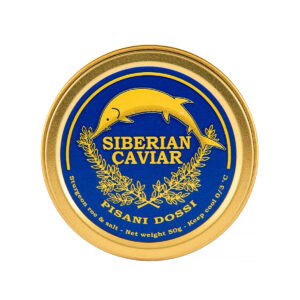
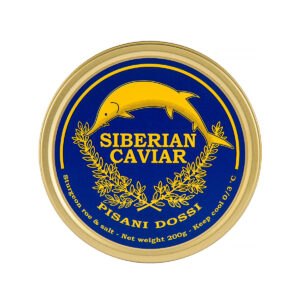
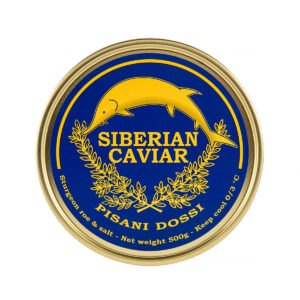
- Premium Siberian Sturgeon Black Caviar: Sourced from Acipenser baerii, this variety produces fine-grained pearls ranging from 2.6 to 3.0 mm. The flavor is clean and elegant, with mild notes of hazelnut. Colors range from black-grey to black-brown. Available in 50 g, 100 g, 200 g, and 500 g tins.
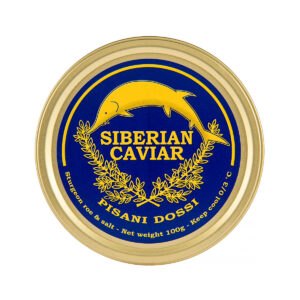
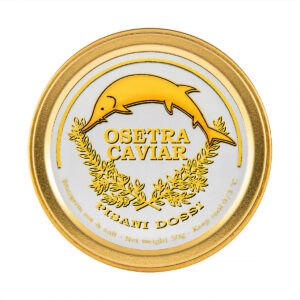
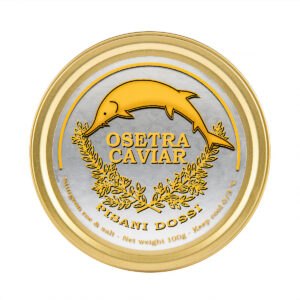
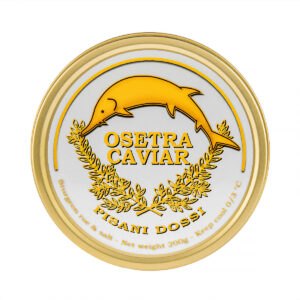
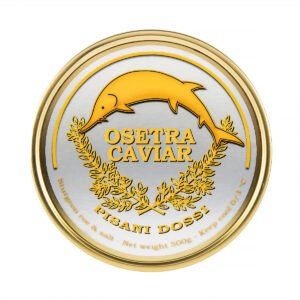
- Premium Osetra Black Caviar: Produced from a hybrid of Acipenser gueldenstaedtii and Acipenser baerii, Osetra roe features larger pearls between 2.8 and 3.2 mm. The eggs carry a delicate, mild taste with a light walnut aftertaste. Color ranges from pearl grey to amber.
Both varieties are harvested from Italian farms following strict aquaculture standards. The cold-chain processing method, from harvest to sealed tin, preserves the natural nutritional composition of the roe at every stage without heat treatment.
Check products in Premium Siberian Sturgeon Black Caviar at PremiumCaviar
Product quality and verified customer feedback
PremiumCaviar carries the Pisani Dossi label across its entire range. Pisani Dossi is an Italian producer known for strict quality control and traditional malossol processing without chemical additives. Fish are conditioned in pure spring water before harvest, and every female is selected carefully before the roe is prepared and salted. The production chain is fully traceable, from sturgeon farm to vacuum-sealed tin.
Buyers who want to check real-world product quality can read verified client reviews on quality, support, and delivery, where customers consistently note authentic caviar flavor, attentive support, and fast shipping. This consistency between product quality and service builds lasting trust with serious food lovers.
Reaching the PremiumCaviar team directly is straightforward for any questions about specific varieties, grammage options, or storage guidance. For anyone ready to experience genuine preservative-free black caviar from traceable Italian sources, the current selection is available for order now.
Check products in Premium Osetra Black Caviar at PremiumCaviar
How to identify and evaluate genuinely preservative-free black caviar
Knowing what to look for on a label or in a product description separates authentic preservative-free black caviar from treated varieties that claim naturalness without delivering it. A few clear indicators make this distinction straightforward for informed buyers.
What ingredient labels reveal about caviar quality and additive content
The ingredient list on a caviar container tells the most direct story about how the product was made. Authentic additive-free caviar contains exactly two ingredients: sturgeon roe and salt. Any additional entries signal that the product has been treated.
Common additives found in non-natural caviar include borax (listed as E285 in EU markets), sodium benzoate, citric acid, and various stabilizers. Borax in particular is banned in several markets, yet still appears in imported products. Spotting E285 on a label is a clear sign the caviar is not chemical-free sturgeon roe.
An honest label also identifies the sturgeon species by its scientific name. CITES regulations require this information for all legally traded caviar. A product that lists only “sturgeon caviar” without specifying the species fails this basic transparency standard and warrants caution.
What a genuine natural caviar label should include:
- Scientific name of the sturgeon species (e.g., Acipenser baerii for Siberian sturgeon)
- Country and farm of origin
- Harvest date and production date
- Salt percentage (ideally 2.7%–5% for malossol)
- CITES label with unique identification code
- Ingredients: only roe and salt
Reading labels with these criteria in mind makes it straightforward to separate genuine clean-label black caviar from products that only appear natural. A short ingredient list combined with full species and origin disclosure is the clearest available marker of quality.
How storage conditions differ between natural and treated black caviar
Storage requirements reveal a great deal about how a caviar product was made. Natural, preservative-free black caviar is more delicate than treated varieties. It requires continuous refrigeration at temperatures between -2°C and +2°C (28°F to 36°F) and has a shorter shelf life once opened.
Pasteurized or chemically preserved caviar tolerates higher storage temperatures and remains stable for much longer periods. While this makes distribution easier, it reflects the trade-off made during processing. The use of heat or chemicals that extends shelf life also alters the product’s taste, texture, and nutrient content.
Natural malossol black caviar typically stays fresh for 4 to 6 weeks under proper refrigeration. Once opened, it should be consumed within two to three days. This shorter window is a reliable indicator of a product that has not been artificially stabilized. Buyers who find caviar with a labeled shelf life of 12 months or more at room temperature can be confident the product has been heavily processed.
FAQ: Frequently Asked Questions
What is the main difference between preservative-free black caviar and treated caviar?
Preservative-free black caviar contains only two ingredients: sturgeon roe and salt. Treated caviar, on the other hand, may include borax (listed as E285 in EU markets), sodium benzoate, citric acid, or heat from pasteurization. These additions extend shelf life but alter the texture, flavor, and nutritional content of the roe.
The most visible effect is on texture. Chemical additives soften the eggs and reduce their natural burst on the palate. Malossol black caviar, processed without any additives, retains the firm, distinct feel and clean oceanic flavor that food lovers associate with authenticity. A short ingredient list on the label is the most reliable indicator that the product has not been chemically treated.
How should preservative-free black caviar be stored at home?
Natural, additive-free black caviar is more delicate than preserved varieties and requires careful temperature control. The ideal storage range falls between 28°F and 32°F, which is -2°C to 0°C. A standard home refrigerator runs warmer than this, so placing the tin at the back of the lowest shelf, on a bed of crushed ice, gives the best result.
Once opened, fresh natural caviar should be consumed within 48 to 72 hours. Air exposure rapidly degrades both flavor and texture. Resealing the tin tightly and returning it to cold immediately after serving helps preserve the remaining product. Metal utensils should be avoided entirely, as they react with the roe and introduce a metallic taste. Mother-of-pearl or bone spoons are the standard choice.
Does preservative-free black caviar taste different from pasteurized versions?
Yes, and the difference is clear to an experienced palate. Pasteurized caviar goes through heat treatment that breaks down some of the flavor-active compounds in the roe. The result is a flatter, less complex taste. The eggs also tend to be softer and less defined in texture after heat exposure.
Cold-processed, preservative-free caviar retains the full natural chemistry of the roe. Amino acids and natural fats remain intact, which produces a richer, more layered flavor: clean, lightly briny, buttery, and with a firm pop when eaten. Chefs and food specialists consistently note that untreated malossol sturgeon caviar delivers a significantly more authentic eating experience than any heat-treated or chemically stabilized alternative.
How can the authenticity of preservative-free black caviar be verified from the label?
A genuine natural black caviar label follows strict international standards. CITES regulations require all legally traded sturgeon caviar to carry a non-reusable label that identifies the species by its scientific name, the country of origin, and the production facility. This information confirms legal traceability and is the first thing to check.
Beyond CITES compliance, the ingredient list should contain only roe and salt. A salt content between 2.5% and 5% confirms malossol processing, while any additional ingredients indicate the presence of preservatives or stabilizers. A labeled shelf life longer than three months at refrigerated temperatures is a strong signal that the product has been preserved with chemical agents. Authentic additive-free black caviar has a shelf life of four to six weeks under proper cold storage conditions.
Conclusion
The growing interest in preservative-free black caviar reflects a broader and lasting shift in how food lovers evaluate what they eat. Natural processing methods, starting with the centuries-old malossol technique, deliver a product that retains its authentic flavor, full nutrient content, and clean ingredient profile. These qualities have become meaningful to buyers who prioritize both taste and transparency.
The data behind clean-label food demand confirms this is not a short-lived preference. With 78% of global consumers seeking naturally made food products and the gourmet caviar market projected to nearly double by 2032, additive-free black caviar is positioned at the intersection of nutrition, authenticity, and gourmet culture. Europe and Asia are both driving this demand, supported by clearer regulations, better traceability, and a growing base of informed food buyers.
Reading labels carefully, understanding certifications, and knowing how storage requirements differ between natural and treated products are the practical tools that let buyers make confident choices. Genuine preservative-free black caviar contains only roe and salt, carries a CITES label, and requires careful refrigeration. These three facts alone separate authentic natural caviar from products that only claim to be natural.