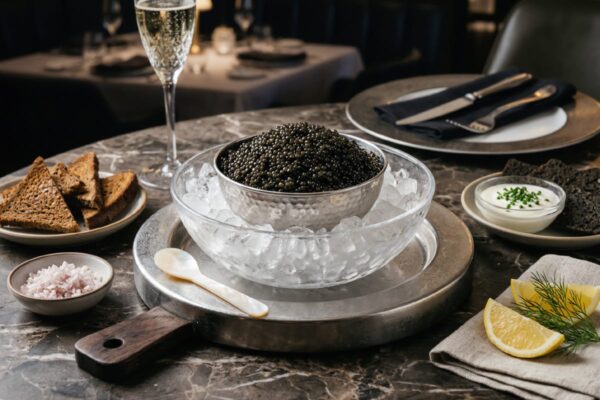
Sturgeon age shapes the flavor of quality black caviar more than almost any other single factor. A roe harvested from a fish that spent 8 years growing tells a very different story on the palate than one from a 25-year-old sturgeon. The difference runs deep, reaching into the fish’s biology, fat chemistry, and roe structure.
Age changes a sturgeon slowly and steadily. As the fish matures, fat deposits in the roe shift in composition, amino acid profiles deepen, and the eggs grow larger with firmer membranes. These changes translate directly into the taste, texture, and finish of black caviar flavor. Knowing what age does to roe helps buyers, chefs, and caviar lovers make smarter choices when selecting a tin.
How sturgeon age shapes the flavor profile of black caviar
The flavor profile of black caviar is not fixed at birth. It builds across years, shaped by the fish’s diet, hormonal cycles, and gradual changes in egg composition. Younger sturgeon produce roe that sits at one end of the taste spectrum, while fish aged 15 years or more produce roe with a richer, more layered character.
Why younger sturgeon produce milder, less complex roe
Sturgeon that are 8 to 12 years old have not yet reached full reproductive maturity in most species. At this stage, the roe carries a clean, lightly briny taste with soft buttery notes. The roe flavor intensity is restrained, making it accessible but not deeply layered.
The lipid content in younger roe sits at the lower end of the 10 to 20% range seen across sturgeon roe chemistry. Fat is what carries flavor compounds, so less of it means fewer complex taste signals. The finish tends to be short, without the lingering aftertaste that older roe delivers.
How mature sturgeon develop richer, nuttier flavor compounds
As a sturgeon ages past 15 years, lipolysis and lipid oxidation inside the maturing eggs begin producing compounds such as 2,4-alkadienals and n-alkanals. These are the primary chemicals responsible for caviar’s deep, nutty flavor development and buttery finish.
The roe from a mature fish carries hazelnut or walnut-like notes alongside a clean oceanic brininess. Osetra sturgeon aged 15 to 20 years, for example, regularly produce caviar described as nutty and briny with earthy undertones. These notes develop because the fish’s own metabolic processes have had years to shape the egg composition.
The role of fish age in caviar fat content and texture
Lipid content in sturgeon roe ranges from 10% to 20% across species and age groups. Older fish tend to sit toward the upper end of this range. Fat content directly ties to mouthfeel: higher lipid levels give the eggs a smooth, melting texture that releases flavor steadily across the palate.
Beyond fat, the egg membrane grows firmer as the fish ages. Older roe holds its shape better under light pressure, then releases cleanly with a satisfying pop. This caviar texture maturity is a key quality marker in professional grading, and it becomes more pronounced the longer the sturgeon has had to develop its roe.
Age-related changes in sturgeon roe fat and flavor compounds:
- Fat content rises toward 18 to 20% in roe from older sturgeon, compared to 10 to 14% in younger fish
- Lipolysis products such as 2,4-alkadienals form the chemical base of caviar’s nutty taste
- Amino acid concentrations build with age, contributing to deeper umami character
- Egg membrane thickness increases with sturgeon maturity, giving a firmer bite
The fat-to-flavor relationship explains why the most sought-after black caviar quality tiers come from mature fish. A 20-year-old sturgeon carries roe that has had time to reach a natural chemical balance. The result is a product that tastes complete, from the first burst of salt to the long, clean finish.
How does sturgeon age affect black caviar quality? A direct answer
Sturgeon age affects black caviar quality by changing the roe’s fat content, grain size, membrane strength, and flavor chemical makeup. A young fish produces smaller eggs with less fat and a simpler taste. An older fish produces larger, firmer eggs with a richer fat profile and a more layered flavor. The biological changes happen continuously from the moment the fish hatches.
The biological changes in sturgeon that alter roe taste over time
Sturgeon are among the oldest fish species alive today, with beluga capable of living over 100 years. Beluga do not reach reproductive maturity until 9 to 20 years of age, and the best roe is not produced until the fish are at least 20 years old.
As sturgeon age, the roe maturation biology shifts through several stages. Ovarian development goes through maturity stages labeled I through IV, and roe harvested at stage IV carries the best flavor and structural quality. At earlier stages, the eggs are less developed and the chemical balance that builds complex taste has not yet formed.
The fish’s diet compounds the effect of age. Older sturgeon have consumed more crustaceans, small fish, and aquatic organisms over a longer period. This diet builds fatty acids, particularly omega-3 compounds such as EPA and DHA, which contribute to caviar’s rich mouthfeel and support the full flavor release that distinguishes aged roe.
Why peak flavor in beluga and osetra caviar occurs at specific ages
Beluga caviar hits its flavor peak when harvested from fish around 20 years old. At this age, the eggs are large with a silvery to dark gray color and carry a buttery, delicate taste that is difficult to replicate from younger fish.
Osetra sturgeon, which can live up to 50 years, produce their best roe between 12 and 20 years of age. The osetra caviar flavor peak at this stage is marked by nutty, briny notes and a firmer texture. Some osetra harvested from older fish show golden hues, a sign of particularly advanced roe development tied to age and diet.
Sevruga sturgeon mature faster, reaching reproductive age in as few as 7 years. The best quality sevruga caviar comes from fish aged 18 to 22 years, when the smaller but bold, briny eggs carry their strongest flavor. Faster maturity in sevruga means the age window for peak sturgeon roe quality is different from beluga or osetra.
Comparing black caviar from young and old sturgeon by flavor grade
The contrast between roe from young and old sturgeon is not subtle. Side by side, the two products carry different salt levels, fat sensations, grain sizes, and finish lengths. Understanding this difference makes grading more than a formality. Age, more than color or size alone, sets the ceiling for flavor.
Flavor intensity and brininess in roe from 8–12 year old sturgeon
Roe from sturgeon aged 8 to 12 years carries a clean, direct brininess. The salt sensation arrives early and fades quickly, leaving little behind on the palate. Brininess in young roe is not a flaw but a sign that the fat and amino acid content has not yet built to the level needed for a longer finish.
The eggs at this stage are smaller in diameter across all major species. For osetra, this means less of the nutty character that defines the species. For sevruga, the bold intensity is present but not yet layered with the deeper savory notes that come from additional years of growth.
Umami depth and finish in caviar from sturgeon aged 20 years or more
Caviar from sturgeon aged 20 years or more carries a clear umami depth in aged caviar. The savory, long finish comes from higher concentrations of glutamate-related amino acids that build in the roe as the fish matures. This is why connoisseurs describe older-fish caviar as having a “complete” taste with no abrupt ending.
Beluga caviar from 20-year-old fish is widely regarded as setting the standard for high-quality sturgeon roe in flavor circles. The eggs melt on the palate and release a smooth, sustained butter note. Osetra from fish of a similar age pushes deeper into the nutty register, with earthy and occasionally fruity undertones that younger fish cannot yet produce.
How grain size and membrane firmness differ with sturgeon maturity
Grain size increases steadily with age. Beluga eggs, which must reach pea size to be classified at the top grade, come from older fish. A younger beluga produces smaller eggs that do not meet this standard. Osetra shows a similar pattern, with golden-hued, larger grains appearing in more mature fish.
Membrane firmness also shifts. Roe from younger sturgeon has a softer membrane that can break under handling, leading to shorter shelf life and a less defined pop on the palate. Membrane firmness in mature roe reflects a structural protein development that takes years. Processors and graders check membrane integrity as one of the first indicators of roe age and readiness.
Which sturgeon species show the strongest age-to-flavor correlation
The table below shows how the three main sturgeon species respond to age across key flavor and quality markers.
| Species |
Age at peak flavor |
Grain size at peak |
Flavor character at peak |
| Beluga (Huso huso) |
~20 years |
Large (pea-sized) |
Buttery, delicate, long finish |
| Osetra (Acipenser gueldenstaedtii) |
12 to 20 years |
Medium to large, golden hue |
Nutty, briny, earthy undertones |
| Sevruga (Acipenser stellatus) |
18 to 22 years |
Small, dark gray |
Bold, briny, savory intensity |
Beluga shows the clearest and most dramatic age-to-flavor shift among the three species. Because it lives the longest and matures the slowest, the gap between 10-year-old and 20-year-old beluga roe is wider than for sevruga. Osetra sits in the middle, with a strong age correlation but a shorter maturation curve than beluga.
Sevruga shows a meaningful age correlation, but because the species matures faster, the flavor ceiling is reached sooner. Older sevruga does not keep building complexity at the same rate that beluga does. The sturgeon species flavor correlation is therefore not uniform across the caviar market.
Species-specific peak harvest markers:
-
Beluga: harvest at ovarian maturity stage IV, fish at minimum 20 years old
-
Osetra: harvest between years 12 and 20 for the most balanced nutty flavor
-
Sevruga: harvest between years 18 and 22 for the strongest, deepest brininess
Choosing the right species and age window is not guesswork. Caviar farms now use ultrasound and biopsy methods to confirm egg development stage before harvest. This precision harvest practice directly aligns with black caviar quality standards, making age-matched roe a consistent product rather than a lucky result.
Pro tip: When comparing osetra tins, look for golden hue eggs over dark ones. Golden coloring in osetra roe signals age and dietary richness in the fish, and this color directly links to a deeper, nuttier flavor profile.
Age-verified black caviar from mature sturgeon at PremiumCaviar Shop
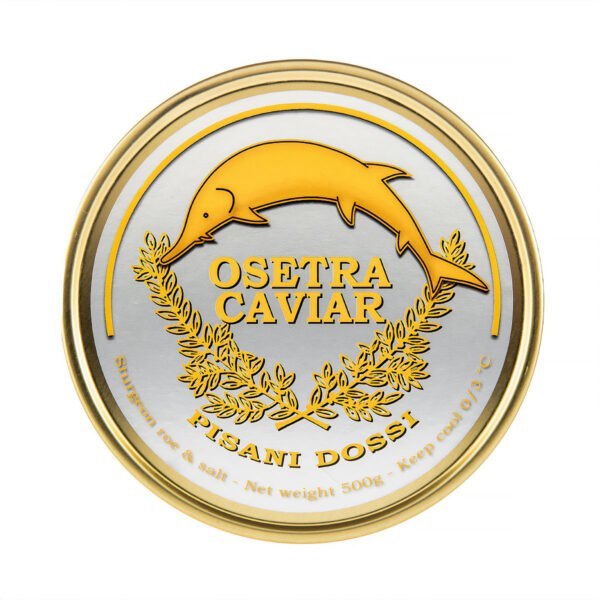
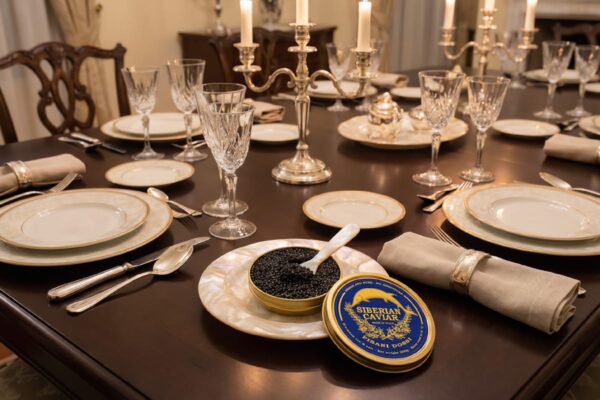
Knowing that sturgeon age shapes black caviar flavor at the biological level, the source of the caviar matters greatly. PremiumCaviar is a boutique that works directly with the Pisani Dossi farm in northern Italy, a producer known for its traceable, carefully timed harvests from mature sturgeon stock. Each tin carries fresh roe processed without additives, relying solely on low-salt malossol curing to preserve natural flavor.
The shop carries two core black caviar collections, each sourced from sturgeon harvested at the stage when roe development reaches its natural peak. This focus on harvest maturity is what sets the products apart from bulk-market alternatives.
Siberian and osetra sturgeon caviar collections
The shop stocks two distinct product lines, each reflecting the flavor character of its species at optimal maturity.
Siberian sturgeon caviar selection:
- Fine to medium grain size, ranging from 2.6 to 3.2 mm in diameter
- Color from dark gray to black brown, consistent across tins
- Clean, elegant flavor with a clear briny finish and no off-notes
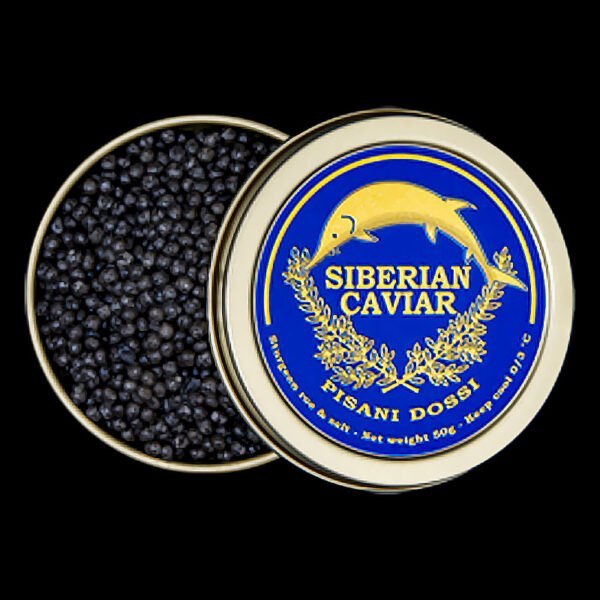
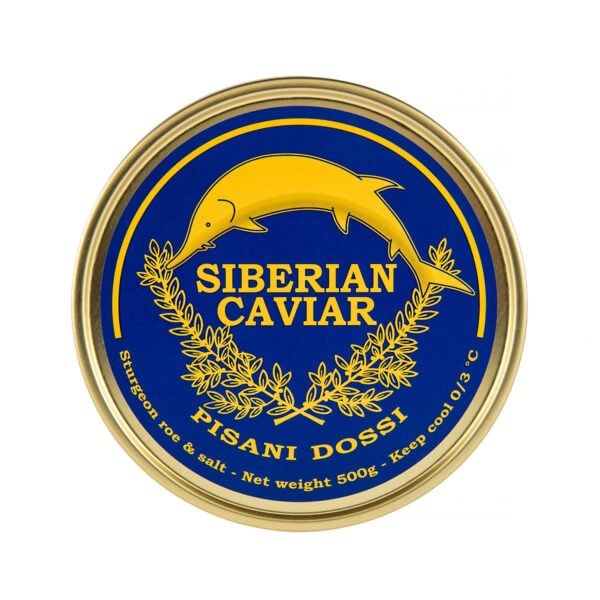
- Available in 50g, 100g, 200g, and 500g formats
Premium Siberian Sturgeon Black Caviar from PremiumCaviar comes from Acipenser baerii fish raised under controlled farm conditions. The roe carries the natural purity that Siberian sturgeon are known for across the professional caviar market.
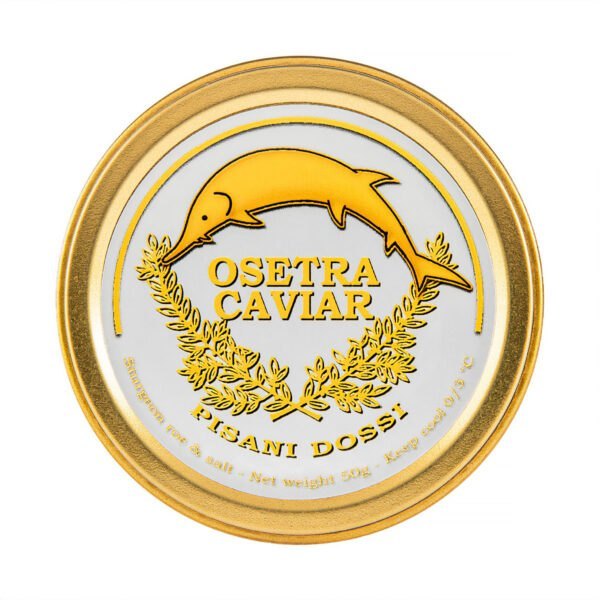
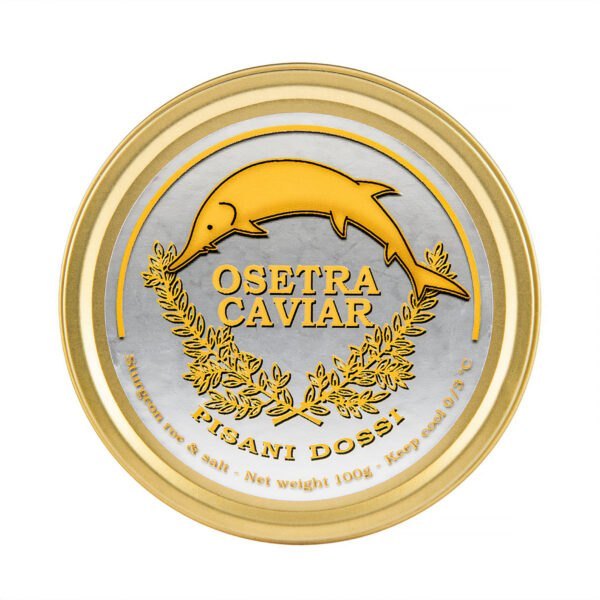
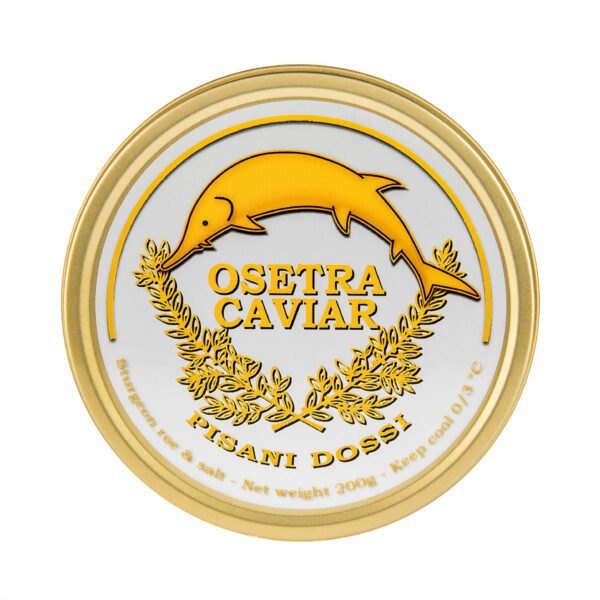
The osetra line draws on Russian sturgeon genetics, specifically Acipenser gueldenstaedtii, crossed in some varieties with Siberian sturgeon for a balanced fat profile. Fish from this line produce osetra black caviar with the nutty, savory depth that only comes from mature roe harvested at the right stage of egg development.
Product quality standards and fresh delivery
Premium Black Caviar at the PremiumCaviar Shop carries no preservatives beyond malossol salt. The low-salt curing method, used at the correct ratio for each roe type, keeps the fat-soluble flavor compounds intact from harvest to tin. This is the same processing method that traditional Russian and Iranian grading systems reward at their highest tiers.
Clients who have received orders rate the shop highly for product quality, attentive support, and reliable delivery speed. Those client reviews confirm consistent freshness and accurate product descriptions across orders.
Premium Osetra Black Caviar and Siberian selections are available for direct order through the shop. For questions about which tin suits a specific occasion, or to get guidance on selecting the right size and variety, the PremiumCaviar team is ready to assist. Reach out through the shop and get expert support before placing an order.
How traditional grading standards account for sturgeon age in black caviar
Traditional grading of black caviar quality has always factored in maturity, even when the systems did not state it directly. Both Russian and Iranian grading practices assess egg size, color uniformity, membrane integrity, and texture. All of these markers are expressions of the sturgeon’s age at harvest.
How Russian and Iranian grading systems reflect age-related flavor tiers
The Russian malossol grading system ranks caviar by salt level, egg uniformity, color, and size. Eggs that score at the top tier are large, uniform in color, and firm in texture, qualities that come from older fish. Younger sturgeon cannot consistently produce eggs that meet these physical criteria.
The Iranian grading system ranks caviar from Grade 1 to Grade 5, with Grade 1 requiring large, uniform eggs, strong color, and delicate texture. This system mirrors the Russian approach in that Grade 1 caviar characteristics match the biological output of mature, well-aged sturgeon. A Grade 1 Iranian osetra or beluga tin reflects fish that had the time to develop roe meeting all top-grade physical markers.
Top-grade caviar markers in both Russian and Iranian systems:
- Large, uniform grain size consistent with mature sturgeon roe
- Firm membrane that holds under handling without breaking
- Color consistency ranging from golden to dark, species-dependent
- Clean, complete flavor with a long, butter-forward finish
- Salt content below 5% to preserve natural roe taste
These grading markers trace back to the sturgeon’s age at harvest. Graders in both traditions learned through generations of practice that larger, firmer, color-consistent roe came from older fish and tasted better. The grading criteria codified this knowledge into structured tiers.
Why malossol processing interacts differently with roe from older fish
Malossol means “little salt” in Russian and uses 2.7% to 5% salt by weight during curing. This low-salt method was designed to let the natural roe flavors come through without masking them. Roe from older sturgeon benefits most from this approach because it carries more natural flavor compounds to preserve.
Younger roe, with its simpler fat and amino acid profile, loses relatively little from higher salting. Older roe, however, can be damaged by excess salt. The fat-soluble flavor compounds that built up over years dissolve under heavy salt loads. Malossol processing with aged roe acts as a light finish, not a preservation blanket, allowing the full spectrum of buttery and nutty notes to reach the palate intact.
How harvest timing relative to sturgeon age affects final caviar quality
Age alone does not guarantee peak flavor. The timing of harvest within the fish’s reproductive cycle matters as much. Roe harvested at ovarian maturity stage IV carries better flavor, color, and structure than roe taken earlier or later in the cycle.
Farms that harvest strictly by age without checking egg development stage risk collecting roe that has not yet reached full chemical maturity. Harvest timing for caviar quality is now confirmed through ultrasound scans and microscopic biopsy of egg cells, checking fat globule distribution and membrane development before any harvest takes place. When age and timing align, the resulting roe sits at the top of every grading scale.
Pro tip: When sourcing farmed caviar, ask whether the producer confirms roe readiness by ultrasound or biopsy before harvest. Farms that use this method produce roe that matches the expected flavor profile for the species and age group more consistently than those that harvest by calendar year alone.
FAQ: Frequently Asked Questions
At what age does sturgeon produce the best quality black caviar?
The age at which sturgeon roe reaches peak quality depends directly on the species. Beluga sturgeon produce their finest caviar at around 20 years old. At this point, the eggs reach the 4 to 5 mm size required for top-grade classification, and the fat content builds to its natural ceiling. Osetra sturgeon hit their best flavor window between 12 and 20 years of age, when a golden hue develops in the roe. Sevruga sturgeon mature faster and produce their strongest caviar between 18 and 22 years old.
A younger fish at 8 to 10 years can produce edible roe, but the caviar flavor complexity stays restrained. The chemical compounds responsible for buttery, nutty, and savory notes build slowly across years. Harvesting too early cuts that process short and results in a product with a shorter finish and less depth.
Why does caviar from older sturgeon taste richer and more complex?
The richer taste of aged sturgeon caviar comes from biology, not chance. As a sturgeon grows older, the fat content inside the eggs rises, reaching up to 18 to 20% in mature fish compared to 10 to 14% in younger ones. Fat carries the volatile flavor compounds responsible for buttery and nutty notes. More fat means more of these signals reach the palate.
Amino acid concentration also builds with age. Compounds such as glutamate-related amino acids accumulate in older roe and create the long, savory finish that marks high-grade black caviar. Lipid oxidation products, including 2,4-alkadienals and n-alkanals, form over years inside the maturing eggs and produce the hazelnut and walnut-like undertones found in top-tier osetra and beluga roe. Younger fish simply have not had the time to produce these compounds at levels that shape the final taste.
A practical way to read age in the tin: larger grain size, firmer membrane, and golden-to-dark color consistency all signal mature roe. These markers, checked in both Russian and Iranian caviar grading systems, trace directly back to the number of years the fish spent growing.
How does sturgeon age change caviar grain size and membrane texture?
Grain size in sturgeon caviar grows steadily as the fish ages. Beluga eggs must reach 4 to 5 mm in diameter to meet Grade 1 standards, and only fish that have had 20 or more years of growth produce eggs consistently at this size. Osetra eggs develop a golden hue and larger diameter between years 12 and 20, which is why top-grade osetra tins show that warm color.
Membrane firmness changes alongside grain size. Roe from younger sturgeon has a softer outer wall that breaks more easily during handling. Older roe carries a firmer membrane built from protein development that takes years. This firmness gives the egg a satisfying, clean pop on the palate rather than a soft, muted break. Processors check membrane integrity as one of the first quality markers before any caviar moves to final grading.
Does the malossol curing method work differently on roe from old versus young sturgeon?
Malossol curing uses 2.7% to 5% salt by weight, a low-salt method designed to preserve the natural taste of the roe without masking it. For roe from mature sturgeon, this approach works best because the eggs already carry deep fat-soluble flavor compounds built over years. A light salt application preserves these compounds and lets the full buttery, nutty, and umami notes reach the palate.
Roe from younger fish has a simpler chemical profile, so it loses less under higher salt levels. Older roe, by contrast, is more sensitive to over-salting. Heavy salt loads can dissolve the fat-soluble flavor compounds that took years to form inside the eggs. This is why malossol processing with mature caviar is treated as a finishing step rather than a preservation tool.
Farms and processors that match salt level to fish age get more consistent results. The interaction between salt and sturgeon roe fat content is what drives the final flavor balance in the tin. Getting that interaction right requires knowing the age of the fish at harvest, not just the weight of salt added during curing.
Conclusion
Sturgeon age and black caviar flavor are linked at the biological level, not just by tradition. As a sturgeon grows from 8 years to 20 years or beyond, the roe it carries changes in fat content, grain size, membrane strength, amino acid depth, and flavor compound richness. Younger fish produce accessible, clean roe with restrained brininess. Older fish produce roe with a deeper, more layered character that holds a long finish on the palate.
The age window for peak flavor varies by species. Beluga peaks at around 20 years, osetra between 12 and 20 years, and sevruga between 18 and 22 years. Both Russian and Iranian grading systems reward the physical markers that mature age produces, including large grain size, firm membranes, and color consistency. Malossol curing, used at 2.7% to 5% salt, works best with older roe because it preserves rather than masks the natural black caviar flavor complexity built over years. Harvest timing at ovarian maturity stage IV, confirmed through ultrasound or biopsy, ensures that age and biological readiness align before the roe ever reaches a tin.
Sources:
- https://pmc.ncbi.nlm.nih.gov/articles/PMC11350799/
- https://pmc.ncbi.nlm.nih.gov/articles/PMC7179139/
- https://pmc.ncbi.nlm.nih.gov/articles/PMC8070692/
- https://pmc.ncbi.nlm.nih.gov/articles/PMC5941233/
- https://pmc.ncbi.nlm.nih.gov/articles/PMC12920915/
- https://pmc.ncbi.nlm.nih.gov/articles/PMC12648089/
- https://pubmed.ncbi.nlm.nih.gov/38309899/
- https://pubmed.ncbi.nlm.nih.gov/39176039/
- https://pubs.sciepub.com/jfnr/10/10/2/index.html
- https://acgpubs.org/doc/20240705155245A4-86-RAFC-2403-3161.pdf
- https://www.sciencedirect.com/science/article/abs/pii/S0308814621029757
- https://repository.library.noaa.gov/view/noaa/16217/noaa_16217_DS1.pdf
- https://cites.org/sites/default/files/eng/com/ac/16/16-07-2.pdf
- https://cites.org/sites/default/files/eng/com/ac/16/16-7-2a9.pdf